
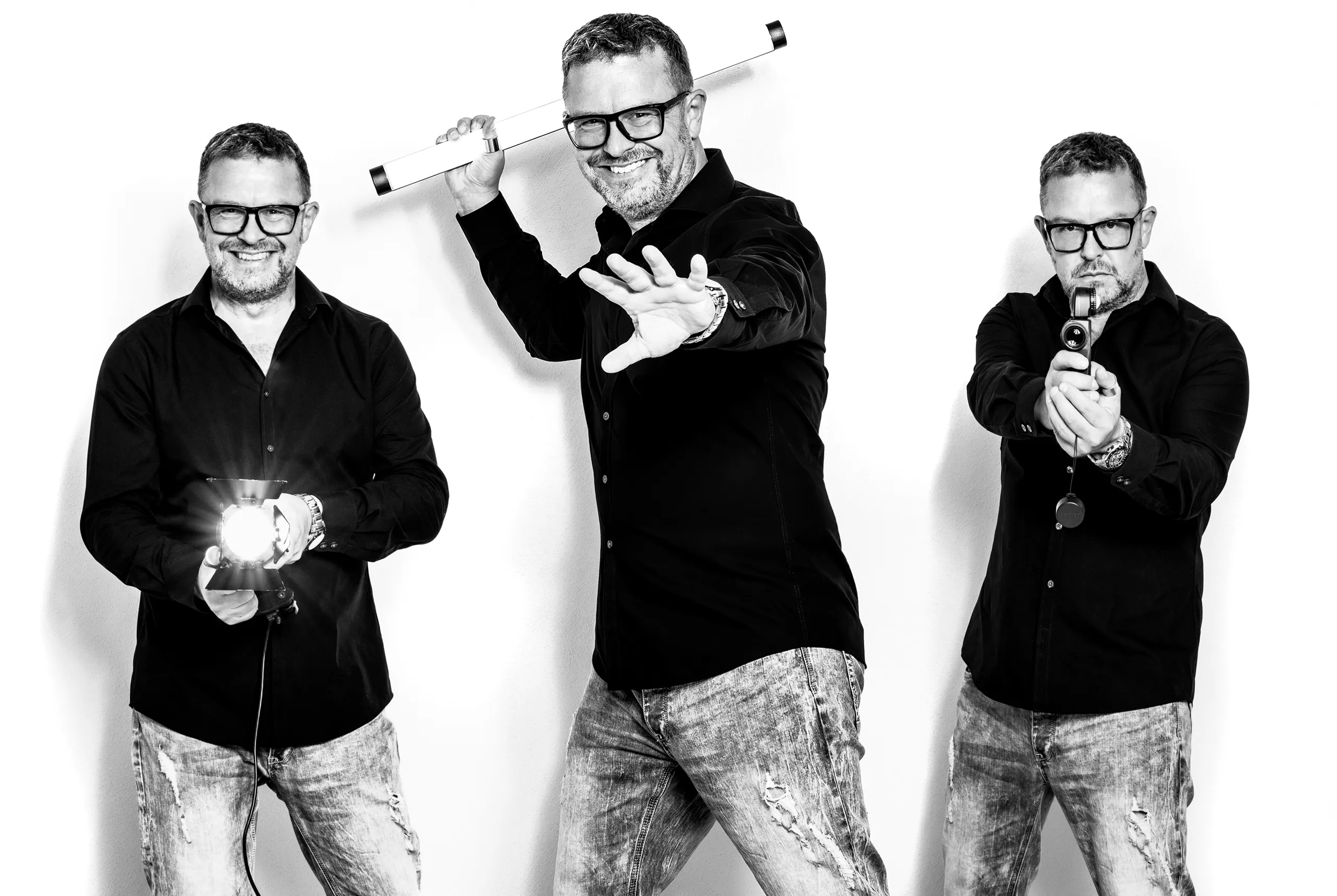
Who tells your story
when you are not in the room?
Video Portrait.Image films, corporate films and brand interviews in Stuttgart and throughout Germany
Most people say image film and mean a film that should achieve something for their company.
It lives from what people say in front of the camera — and from how well prepared they are for it.
What you get when you ask for an image film.
The term comes from a time when a film was meant to depict a company's philosophy. Today it is meant to create the desired outside image in the first place — and that takes people saying something others believe.
My focus is the guided interview: preliminary talk, conversation outline, training before the shooting day, moderation during recording. From this comes the film about your company — what you make, how you work, what sets you apart.
Sound. Attitude. Presence.
Does your film sound the way it should?
We record sound with the same dedication as picture — because sound is what stays in your head after the film. Often it is the voice. But some films work entirely without words — through music, sound design or ambience alone. Sound works directly on the subconscious, while the image is filtered and embellished by the brain. If you want to reach people emotionally, you start with sound and extend its effect through the image.
Does your film carry your attitude — or do you hide it behind slides?
Nobody watches image films that open with bullet points to the end. Brand interviews that open with a statement, they do. The difference lies in the concept — before the first take. Its core is storytelling: in the end people always remember stories, not data and figures. Stories are told in films — and in images. As a content creator who has lived through every technology shift in this profession — from sheet film to the digital sensor — Jens Achtert delivers both.
Does your film still resonate when the credits roll?
Premium image films are not loud. They are dense. This density is created twice: in the concept, long before the first take — and in post-production, long after the last. The most expensive shooting day is the one without a concept. The film is made before the first shot. And the most expensive film is the one nobody sees: as a trained content manager, Jens Achtert knows that the best film producers rely on the 50:50 rule — 50 percent of the budget for producing the film or series, 50 percent for promoting it. It does not work any other way.
“One of the best photographers and filmmakers in Stuttgart.”
Credit: camera Dominik Apanowicz
Playing the video connects to Vimeo. In the process, data is transferred to the USA.
One image film becomes an entire brand world.
Main film. Reels. Behind-the-scenes series. Stills. What you commission as one film becomes a content ecosystem that carries a brand for years.
As a rule, you commission an image film. That is the order. What we make of it is a great deal more — because a single image film is rarely watched twice.
A single image film is rarely watched twice. A whole brand interview series is — when it is conceived from the same material in different lengths, tones and platform formats. Mini statements for LinkedIn. Teaser reels for Instagram. Long versions for trade fairs, talks, investor rounds. One production thus becomes not a single line item — but a whole system.
Behind-the-scenes material regularly outperforms the hero video in social engagement by a factor of two to four. The reason: people believe processes, not poses. The unscripted seconds in which the main person tells one more anecdote, laughs briefly, pauses — those are the moments that set a brand interview apart from a commercial.
We shoot with three cameras simultaneously: one for the statement, one for the detail shot, one for the process. Plus separate audio tracks for every voice. A second film crew documents what happens on set at the same time — the actual behind the scenes. And a second photographer captures the work of the camera teams. In post-production, the material becomes not one film — but a whole family.
The content system consists of stills and moving images alike — scenes, reels and shorts that can be recombined again and again.
2–4 minutes. For your website, investor rounds, reception. The main cinematic work.
From the main film footage. For LinkedIn, trade fairs, talks, video inserts.
A separate crew documents the shooting day. For social media, recruiting, your homepage.
From the shooting day and from the second photographer. For print, press kit, newsletter.
Some clients work with the material from a single production for years. That is the economic logic that turns an image film into an investment — rather than a one-off marketing expense.
What it looks like when a film hits the mark.
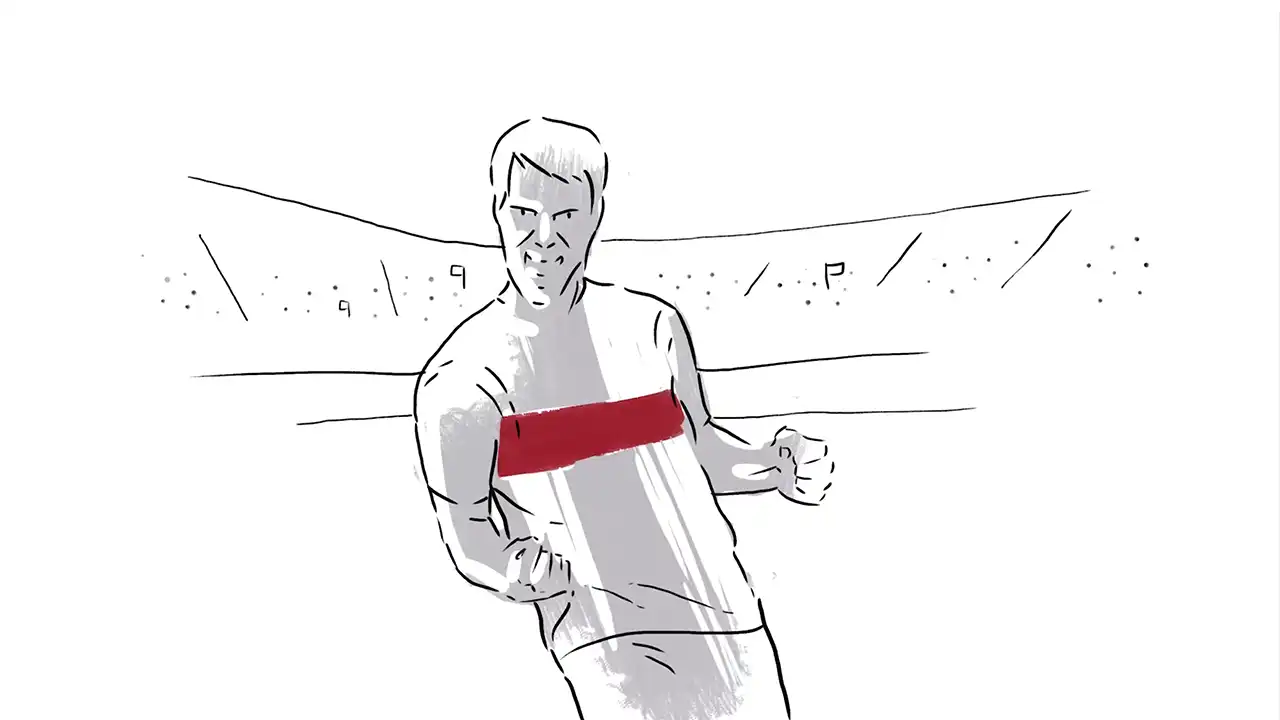
Commercial for the software company ELO Digital Office as a partner of VfB Stuttgart — produced for the big stage in the stadium: a spot that works in a few seconds.
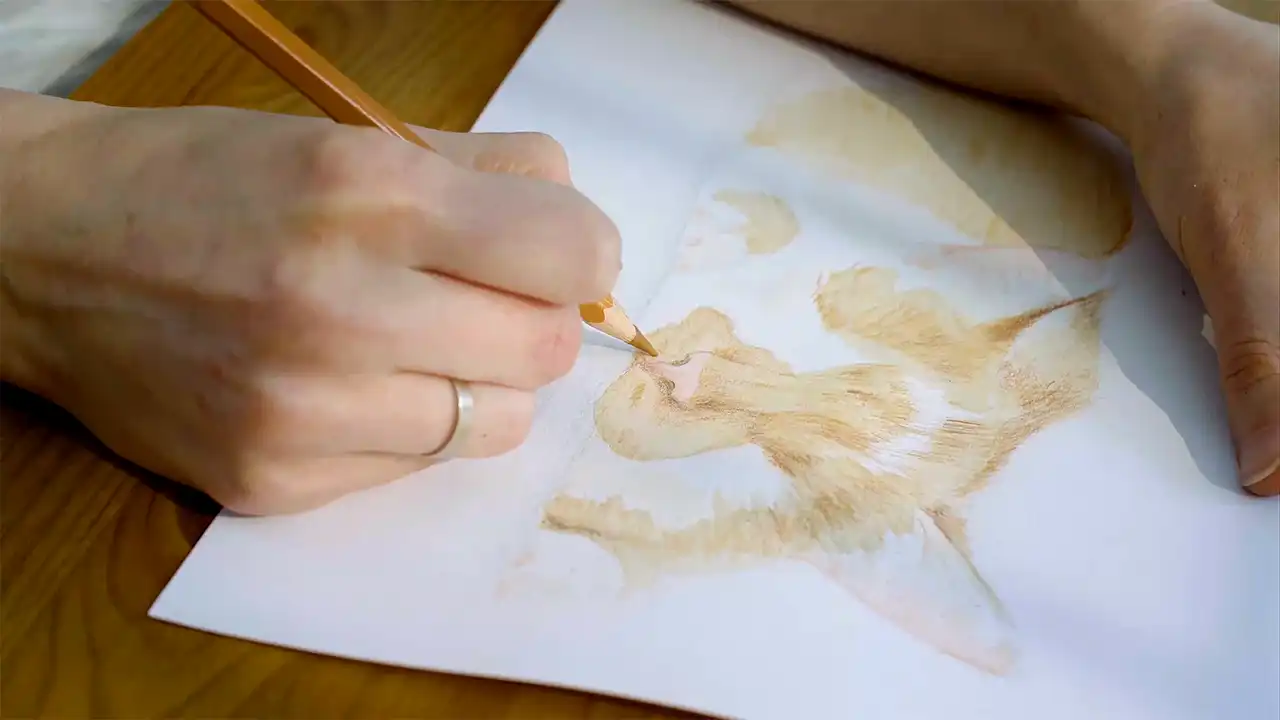
Commercial for the premium pet food brand CATZ Finefood — brand world, product and emotion in a few seconds of moving image.
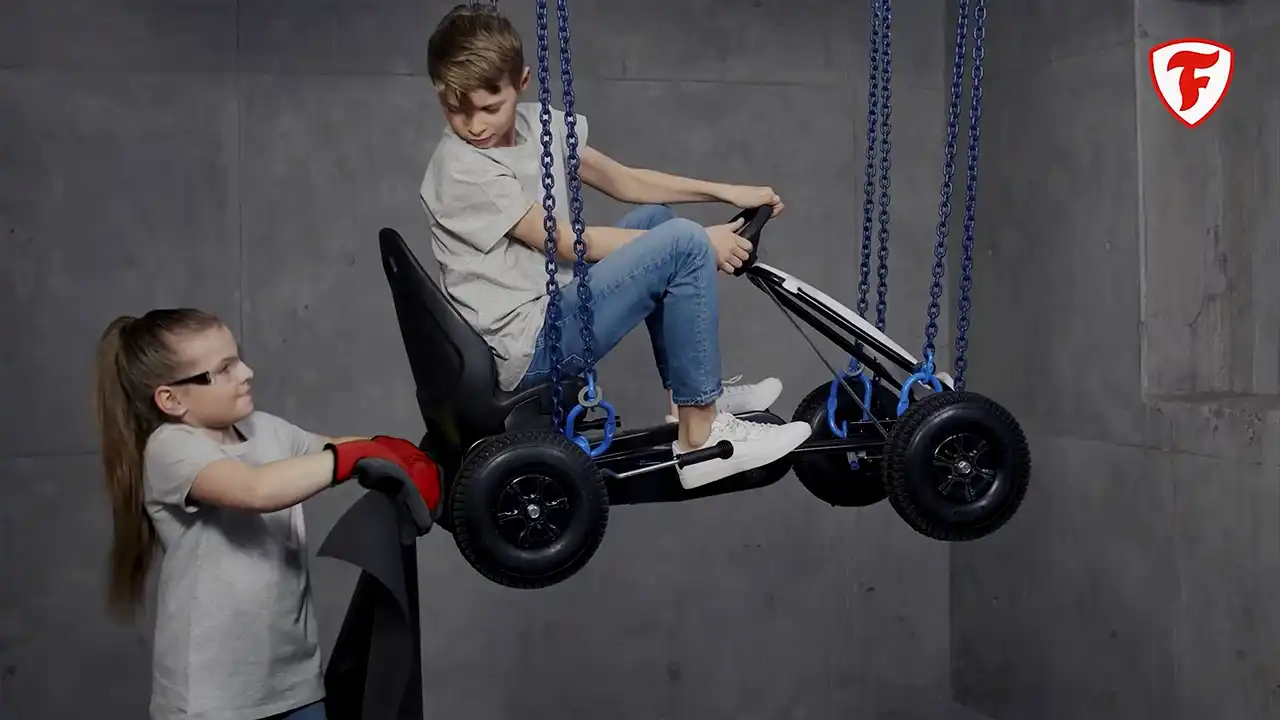
Product film for Firestone's RubberGard EPDM roofing membrane — “Indestructible” as a cinematic thesis. Industrial storytelling that charges a technical product with emotion.
Many productions are made under special usage rights, licences or confidentially agreed use — so they may not be shown publicly. What you see here is only a small selection of the work. On request, Jens Achtert puts together a selection of projects that match your plans — and sends it to you via a private link.
Request matching references →Why a film with a concept stays in the memory — and one without disappears in the feed.
Step one: concept and storytelling
The focus of every production lies before the first shooting day — in concept development. Videos with a clearly recognisable, or at least felt, concept and real storytelling stay in the viewer's memory. And they achieve more: whoever sees or feels an interesting, coherent concept in a company video transfers that impression to the company itself. If a brand presents its public image and its videos smartly, then this company must be smart. Jens Achtert calls this effect transfer — it is the real value of an image film.
Step two: planning and budgeting
Define clear goals, analyse the chances of reaching them and calculate the resources needed — time, work and money. Production only begins once goal and budget match. That keeps predictable what otherwise tends to get out of hand in video productions.
Step three: the right team
Many years in the profession and long-standing relationships have produced a portfolio of experienced freelancers. So there is the right person for every task — from casting the performers to the crew on set. Depending on the scope of a project, Jens Achtert works as producer only, as director, or as lighting cameraman and sound engineer within the team.
His personal strength is conducting interviews: through training beforehand or directly on set, skilful questioning, psychological techniques and confident direction, the person in front of the camera shows their best version. Even when an interview takes a little longer — the edited material flows in its language, is clear in its wording and comes across as professional. Special tools are part of this: various teleprompters and specially developed teleprompter techniques that quickly and reliably help people speak fluently and naturally in front of the camera — backed by years of experience in directing and presenting.
Step four: evaluation and content
In the end there is never just one piece. The product is multi-layered content, deliberately created so that it can be used on many platforms. That is why several camera teams are often on site, taking on different perspectives and functions.
Why identical lighting makes brands stronger than two separate shooting days.
Most companies commission photo and video separately — from different providers, on different days, in different styles. The result: on the website the management smiles in warm studio light; in the image film they sit in a coolly lit conference room. Nobody recognises that both are the same brand.
We solve this in a single shooting day — with an identical lighting setup for photo and film. The same key light, the same fill, the same colour temperature. The advantage is not the price. It is that profile picture, annual report and film then recognisably belong together — the same visual language on every channel.
The opposite is the norm: warm studio light on the website, a coolly lit conference room in the film. We produce in the Greater Stuttgart area, in Pforzheim, Karlsruhe, Heilbronn, Reutlingen, Ulm, Mannheim and Frankfurt am Main — and on your premises.
From a compact portrait session to a full Brand Day with photo, film and content. Each package is tailored to a clearly defined need.
What clients ask before the shooting day.
What does a premium image film by Jens Achtert cost?
Image film and brand interview are part of the four standard packages — from a compact portrait session to a full Brand Day with photo, film and content. Complete overview including all content and gross prices on the packages page. Larger productions, several locations or individual concepts on request.
How many films do I get from one shooting day?
A standard shooting day produces at least four final films: an image film of two to four minutes, one or two mini statements of 30 to 60 seconds for LinkedIn and recruiting, and a behind-the-scenes video of around two minutes. Plus a whole series of 9:16 reel cuts for Instagram and TikTok from the same material.
What does a brand interview day look like in practice?
Preliminary meeting about a week before the shooting day: together we develop the conversation outline and your key messages. On the day itself, setup takes about 90 minutes, the interview block about 60 to 90 minutes, B-roll and detail shots about two hours. All in all a full working day of eight to ten hours, ideally at your location.
Are photo and video produced at the same time?
Yes — that is one of the most important advantages. On one shooting day, business portraits and brand interview films are created in parallel with identical lighting. That not only saves a second shooting day, it also ensures complete consistency in visual language between the annual report portrait and the image film.
In which cities does Jens Achtert work on film productions?
Based in Calw, Baden-Württemberg. Focus on the Greater Stuttgart area, plus Pforzheim, Karlsruhe, Heilbronn, Reutlingen, Ulm, Mannheim and Frankfurt am Main. Firmly established in Coburg and Upper Franconia since two years of agency work there. Regularly in Switzerland and Austria around Lake Constance. Further afield on request: previous locations include Milan, Vienna, Zurich and Paris.
How long does post-production take until the film is finished?
You receive a first rough cut within ten working days of the shooting day. The final video with colour grading, sound mix and subtitles typically after three to four weeks. Mini statements and BTS clips follow in the weeks after. For time-critical releases such as press conferences, express post-production is possible for a surcharge.
In which formats is the final data delivered?
For print you receive final files in the appropriate CMYK profile – as TIFF on request, if the images are going into a layout or will be edited further. For web and social I deliver images up to 3,840 pixels wide, videos as MP4 in 4K as well as in optimised versions for LinkedIn and Instagram. Which format is right for what is explained in detail on the File Delivery & Formats page (German).
Let's talk.
One sentence on the occasion and intended use is enough. I usually reply within 24 hours – with a proposed date, the time required and a budget range.